

??With the continuous development of modern home design and children's educational products, hollow jigsaw puzzles, as a toy that combines fun and educational significance, have gradually gained favor with parents and educators. The core lies in the precise matching between different shaped pieces and corresponding holes, which exercises children's spatial cognitive ability, hand-eye coordination, and logical thinking ability. However, to achieve this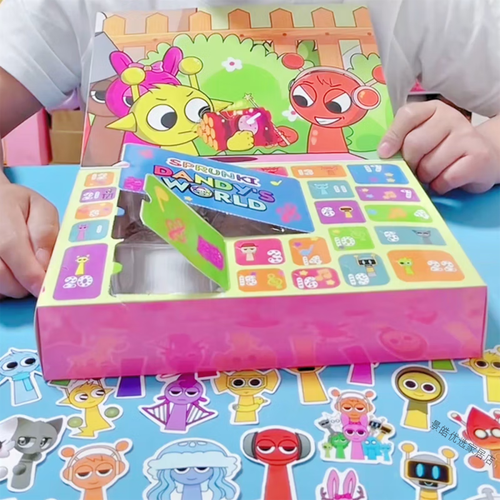 goal, the key lies in the size matching standard between the pieces and the holes. Therefore, formulating a scientific, standardized, and unified 'Hollow Jigsaw Puzzle Hole Contour Piece Size Matching Standard' not only helps to improve product quality but also ensures safety in use and enhances user experience.
Firstly, from the perspective of design, the size matching between the interlocking pieces and the holes must follow certain proportion principles. Generally, the outer contour size of the interlocking pieces should be slightly smaller than the inner contour size of the holes to ensure that the pieces can be smoothly inserted and avoid difficulties or damage due to tightness. According to the internationally recognized toy safety standards, the gap between the interlocking pieces and the holes should be between 1.5 millimeters and 3 millimeters. This range can ensure the smoothness of assembly while preventing the pieces from being too loose and affecting the stability of the puzzle. In addition, the thickness of the interlocking pieces also needs to match the depth of the holes. It is generally recommended that the thickness of the interlocking pieces be between 2 millimeters and 4 millimeters, and the depth of the holes be between 3 millimeters and 5 millimeters, thus forming a good visual and tactile fit.
Secondly, in terms of material selection, the matching of block and hole dimensions also needs to consider the elasticity and wear resistance of the material. Common puzzle materials include plastic, wood, and soft silicone, among which each material has different physical properties and different requirements for dimensional accuracy. For example, plastic blocks have good hardness and compressive resistance, but are prone to deformation due to temperature changes, so certain thermal expansion and contraction allowance should be reserved in the design; while soft silicone blocks, due to their softness, can withstand greater deformation, but have higher requirements for the accuracy of blocks and holes to avoid assembly failure due to deformation. Therefore, for blocks of different materials, corresponding size tolerance standards should be formulated to ensure their stability and durability in actual use.
Furthermore, from the perspective of user experience, the matching of block and hole dimensions directly affects the fun and educational effects of the puzzle. If the blocks are too large or too small, not only will it increase the difficulty of assembly, but it may also reduce the children's interest in participation. Therefore, the design process should fully consider the age characteristics and operational ability of children, and reasonably set the size and shape of the blocks. For example, for puzzles for children aged 3-6, the blocks should be as large as possible for easy grasping and operation; while for children over 7 years old, the block size can be appropriately reduced to increase the challenge of the puzzle. At the same time, the shape of the holes should also be diversified to cultivate children's cognitive ability of geometric shapes, such as circles, squares, triangles, and pentagons, and the proportions between each shape should be maintained to avoid difficult recognition or mismatching situations.
Finally, in order to ensure the quality and safety of puzzle products, both the country and the industry should establish a unified 'Standard for the Matching Dimensions of Hole Patterns on Hollow Jigsaw Puzzle Blocks', covering multiple aspects such as the dimensional tolerance of blocks and holes, material properties, structural design, and testing methods. This standard should be led by professional institutions and combined with advanced domestic and international experience, taking into account practicality and foresight. At the same time, enterprises should also strictly comply with the standards, carry out regular quality inspections, and ensure that products meet relevant requirements, truly achieving the goal of 'matching accurately, assembling quickly, and playing well'.
In summary, the 'Standard for the Matching Dimensions of Hole Patterns on Hollow Jigsaw Puzzle Blocks' is not only a guarantee of product quality, but also an important foundation for improving user experience and educational value. Only through scientific and reasonable standards can the healthy development of the hollow jigsaw puzzle industry be promoted, allowing more children to learn in happiness and grow through play.